The Last Seduction (1994): Hustler With A Heart Of Stone
A narcissistic sociopath uses ill-gotten gains to launch a real estate empire in 20th century New York City. Sound familiar?

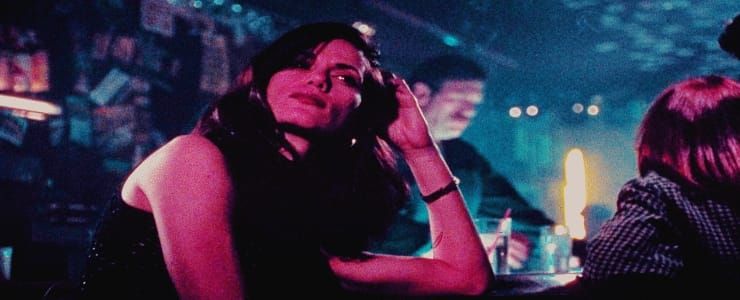
1994 was a busy year for the Neo-noir, with films like Blink, The Getaway, China Moon, Léon: The Professional and Quentin Tarantino’s Pulp Fiction all released in quick succession. But while many of these movies have lost their lustre, The Last Seduction seems both old and new at once.
A brave feat of casting back in 1994, Linda Fiorentino’s turn as Bridget Gregory would be applauded in today’s progressive entertainment landscape. Moreover, if imported to our contemporary zeitgeist, the film’s sex-positive feminism would breathe refreshing life into a disjointed movement waylaid by vapid social media evangelism and the monetized victimhood that fuels our attention-based digital economy.
Educate yourselves Generation Z, because The Last Seduction got it right: a cunning female protagonist in total control of her body, her decisions, and her money. Earning, lying, cheating, stealing, fighting, killing and fucking: Bridget Gregory does everything a man can do. And she does it better.
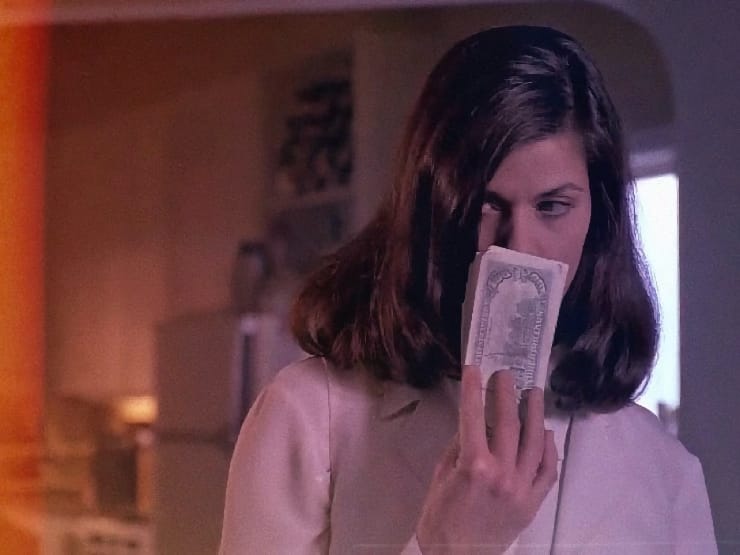
Beyond these cultural interpretations, The Last Seduction is ultimately a heist film: Bridget steals her idiotic husband’s drug money and then skips town. And while the story could have been about how her husband got his money back, instead, the movie is about how Bridget manages to keep it.
I think what I respect the most about The Last Seduction is the clever way it’s written.
A well-crafted story rarely features more than a handful of characters. If you need a chart to help keep track of names and occupations, you’re probably watching a fantasy movie, or another pile of superhero garbage.
Refreshingly (for those of us with taste), The Last Seduction limits itself to just five primary characters. In this respect, writer Steve Barancik’s script reminds me of a crime novel by the likes of James Sallis or Nic Pizzolatto. “Hard-boiled” isn’t catchy marketing jargon. It describes a text that’s been stripped down to its most essential components. Here, Barancik nails it. Watch the first twenty minutes of The Last Seduction and tell me that I’m wrong.
Despite what often feel like comic undertones, the film gets darker and darker as we’re steered toward its inevitable conclusion. What begins with sassy innuendo and risky public sex escalates to a hand-job-car-crash-murder and a simulated rape. What’s not to like?!
The Last Seduction’s complex metaphysics should also be considered. Not only does Bridget represent the progression of the Femme Fatale within the John Dahl canon, she also personifies the evolution of the Femme Fatale across decades of cinema. It’s hard to miss the hints of Film Noir legends like Barbara Stanwyck, Rita Hayworth or Jean Harlow contained within Linda Fiorentino’s portrayal of Bridget Gregory.
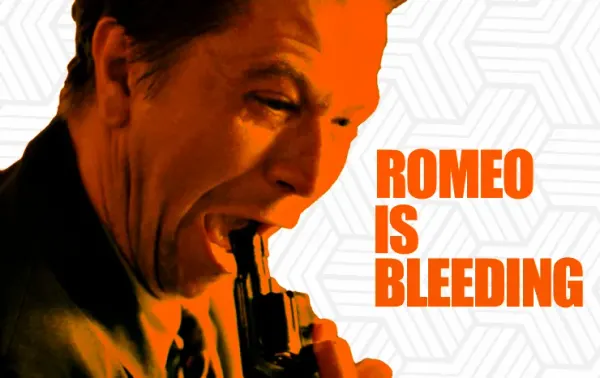
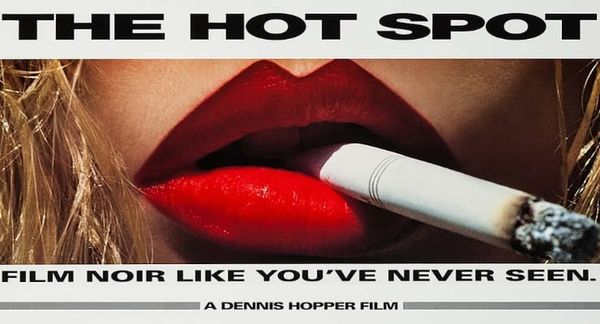
Aptly deemed a Neo-Noir by critics, one should not dismiss The Last Seduction’s unique cinematic world. Police are entirely absent. The often comic tone is juxtaposed with treachery and violence. Low-end crooks pull low-end scams and only naive rubes pay the price. In other words, like Dennis Hopper’s The Hot Spot, The Last Seduction is a Neo-Noir story that takes place firmly in the seedy paperback world of a 1950’s Pulp novel.
The Narrative Perspective at work here is also perfectly suited to the world of the film.
The Last Seduction employs a third person limited point of view. Bridget appears in almost every scene. Those from which she’s absent are brief and procedural, present in the narrative purely for the sake of cohesion and momentum.
Like most Film Noirs, the secondary characters don’t change. Rubes are rubes. Thugs are thugs. Lying husbands keep on lying. But unlike these other players, Bridget does change. In fact, her character arc mirrors that of the overall story. As her ambition grows, her sense of right and wrong completely disappears. Any other style of narrative perspective would eliminate this complexity.
Lastly, in the film’s closing scene, when Bridget climbs into her limousine and smiles, we’re left to wonder if perhaps she’s always been this dark, but never had the opportunity to show it. An omniscient or first-person point of view would have robbed the movie of this brief but brilliant moment of nuance.
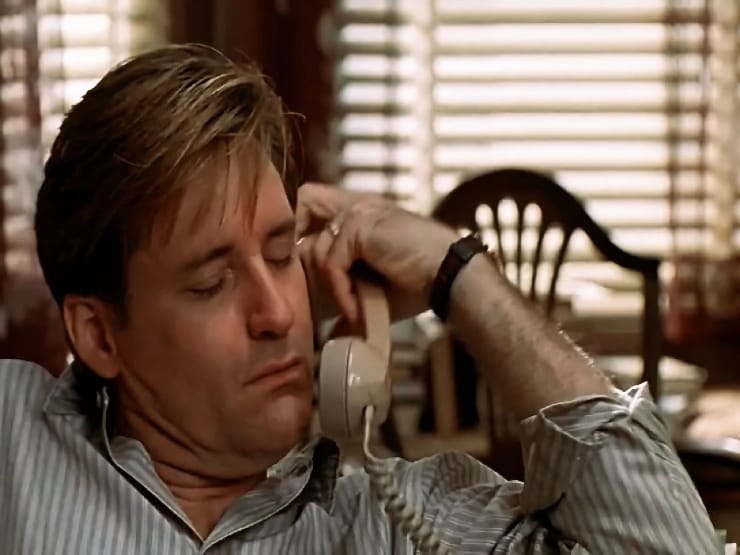
Every good Film Noir contains a decisive turn: the moment when the protagonist crosses a moral line from which there is no coming back. You’ll be hard-pressed to find a film with a turn more memorable than The Last Seduction.
Using a racist stereotype as a pretext, Bridget uses her seductive powers to persuade Private Detective Harlan (Bill Nunn) into showing her his penis. But as he’s fiddling with his pants, Bridget deliberately crashes her jeep into a tree.
Harlan flies through the windshield and dies, while Bridget is protected from serious injury by her seat belt and the jeep’s driver’s side airbag.
And while the act itself represents another step towards serious criminality, it’s Bridget’s behaviour after the “accident” displays that the decisive turn.
She manipulates both the hospital staff and the sheriff with total ease, suggesting that Harlan was about to sexually assault her when she crashed the car. Later, when her fake love note succeeds in putting Mike under her complete control, Bridget’s short bout of maniacal laughter tells us that the turn is complete.
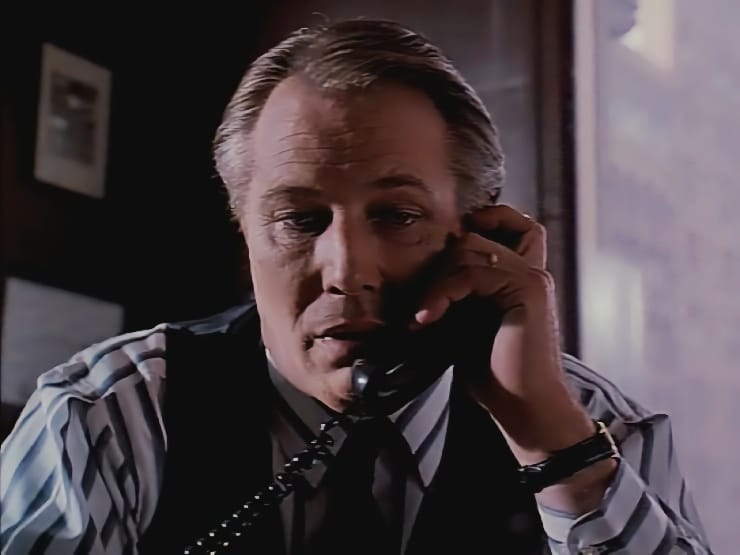
Beyond its role as a plot device, the city/country dynamic in The Last Seduction references a common trope in the Film Noir canon: a stranger comes to town. On the run, a mysterious city dwelling protagonist adopts a new identity in a small town, until eventually, the ruse is uncovered.
This callback to classic Noirs like Out of The Past (1947), The Stranger (1946), and the 1950 Barbara Stanwyck vehicle No Man Of Her Own imports both texture and relevance, and lets us know what type of film we’re watching.
Amazingly, Bridget finds herself marooned in the town of Beston just twelve minutes into the first act. Enter Mike Swale—the perfect mark. Mike’s appearance sets up a distinct pattern: with the exception of Frank Griffith (J.T. Walsh) every male character in The Last Seduction is a spineless dope, easily outsmarted by a more sophisticated female.
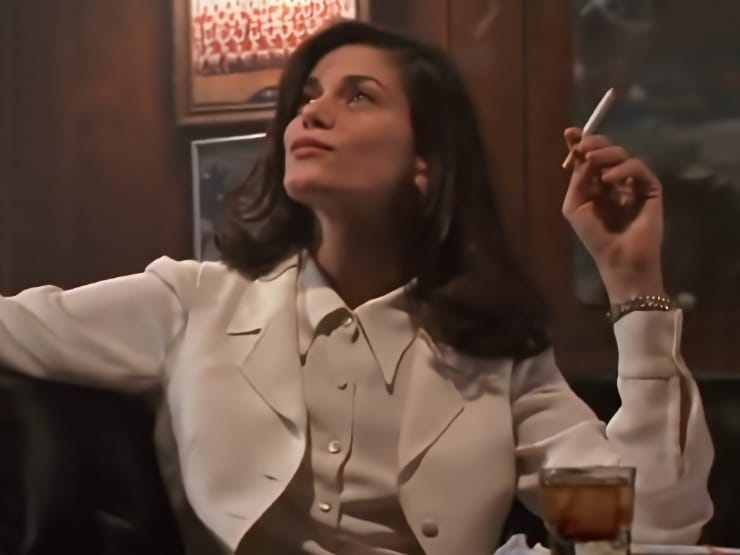
The bar scene also marks the moment Bridget comes into her own: smoking, drinking, talking trash. Minus the obscenities, the pitter-patter dialogue between her and Mike sounds lifted from the 1940’s. Consider this exchange, a few days after their raunchy outdoor sex scene:
“You living here now or what?”
“For the time being.”
“Yeah? Where do I fit in?”
“You’re my designated fuck.”
“Designated fuck? Do they make cards for that? What if I want to be more than your designated fuck?”
“I’ll designate someone else.”
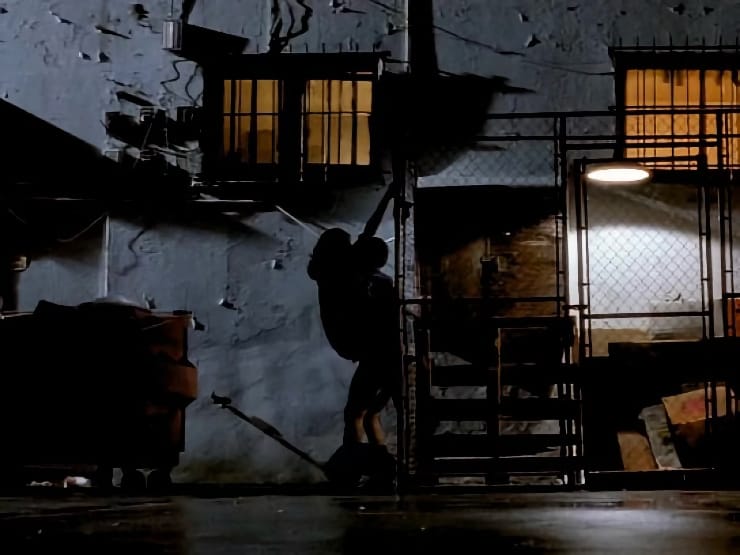
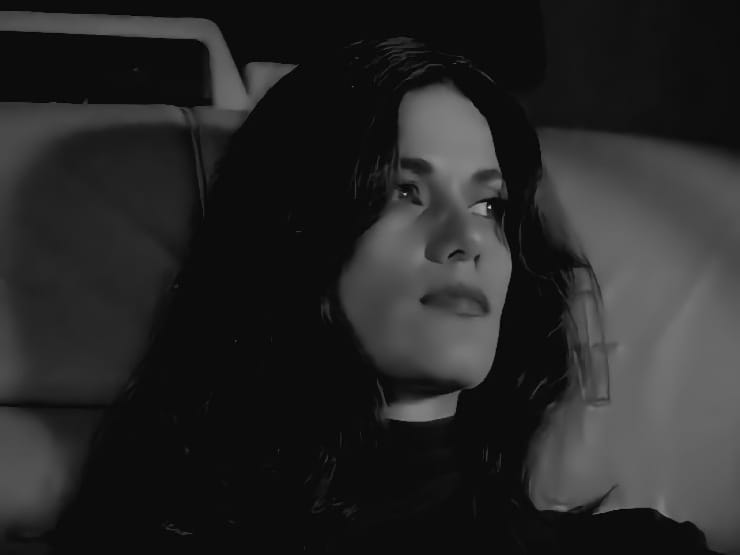
Perhaps the most memorable aspect of The Last Seduction is its brilliant closing scene. An exquisitely dressed Bridget steps out of her Manhattan penthouse and climbs into a limousine.
As her limo pulls away, Bridget leans her head against the seat and smiles. This is Bridget Gregory’s long awaited moment of emancipation.
She’s seduced her last rube. She’s divorced her last deadbeat husband. She’s paid her last rent cheque. She’ll never have to depend on a man ever again.
The most obvious comparison here is 1944’s Double Indemnity. Although their respective plots are only vaguely similar, there’s a sense in which The Last Seduction is an inside-out version of the Billy Wilder classic. Bridget even reserves her fake plane ticket under the name “Mrs. Neff,” a reference to Double Indemnity‘s insurance salesman protagonist, Walter Neff.
Because The Last Seduction is very much concerned with re-contextualizing traditional notions of the Femme Fatale archetype, one could argue that virtually any Film Noir movie is comparable. But to me, the only film that truly deserves a mention is Baby Face (1933).
Barbara Stanwyck’s performance as Lily Powers is best remembered as one of the films that ended the Pre-Code Era, inciting censor boards to invent rules around decency and obscenity in cinema. More importantly, Stanwyck’s tough-talking Lily Powers contributed to the evolution of the Femme Fatale archetype, a character trope she would later come to define with her performance in Double Indemnity (1944).
In Baby Face, Powers leaves her life as a Pennsylvania barmaid behind and heads for New York City. Her only assets are her looks, her wits, and her ability to seduce powerful men. By the end of the film, Lily is married to a millionaire whom she discovers she has come to care about as well.
What’s interesting about The Last Seduction is that Bridget is already married—to a doctor. She already lives in New York City. She already has security, sophistication, and a relative degree of status. And although the means of her emancipation are similar, unlike Lily Powers, Bridget wants to free herself from men, not attach herself to one.
In effect, The Last Seduction answers the hypothetical cinematic question: “What would Lily Powers do if she found herself transported to 1990’s New York City?”
For this reason alone, The Last Seduction has earned its rightful place in the Film Noir canon.
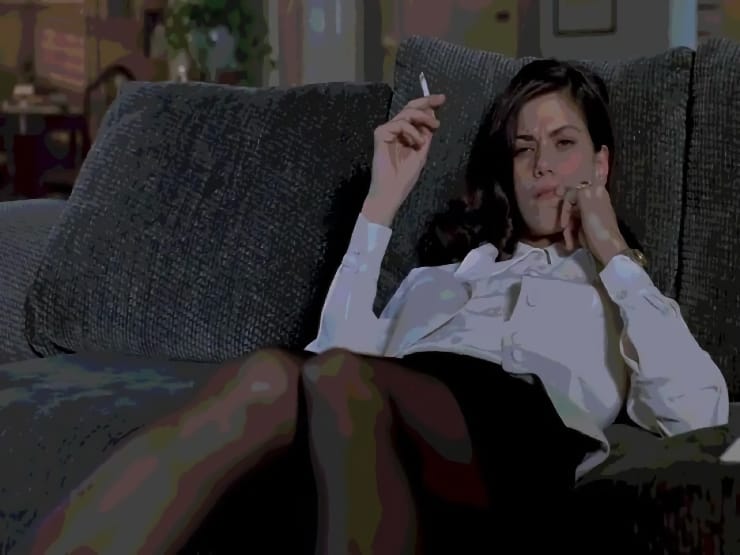
Beyond its obvious intention to modernize the standard Femme Fatale character trope, The Last Seduction is ultimately the emancipatory story of a woman taking control of her future—by any means necessary.
Using Bridget Gregory as an analogue for America at large, the film implies that women no longer need to use their powers of seduction to be successful—hence the word “Last” in the title.
In terms of metaphysics, the film cleverly inverts the standard Film Noir setup: the male protagonists are reduced to stock characters, while the story is instead recounted from the Femme Fatale’s point of view.
Finally, given the year of its release, The Last Seduction has something to say about the trajectory of New York City Real Estate.
Consider the scope of Bridget’s transgressions throughout the film: she steals seven-hundred and fifty thousand dollars, she assumes a false identity, she kills a man, she kills her husband, and she frames another man for rape and murder.
She does these things not in order to consolidate mob power (Scarface), avenge her family’s murder (John Wick), or collect a massive life insurance payout (Double Indemnity). Instead, Bridget commits these heinous crimes simply to acquire a posh Manhattan penthouse. Full stop.
Here, the film inadvertently predicts where New York City real estate is headed. The average price per square foot increased by 600% between 1997 and 2019, which means that Bridget’s $750,000 penthouse would now be worth roughly 4.5 million dollars. A price worth killing for?
A film that bravely re-imagines the Film Noir Femme Fatale, The Last Seduction is absolutely worth watching. Completists should add The Last Seduction to their watchlists simply because it’s directed by John Dahl. You can’t fully appreciate the Neo-Noir canon without sampling contributions from the 1990’s, and Dahl’s films are among the decade’s very best.
Finally, like all meaningful art, The Last Seduction possesses the rare ability to transcend beyond its era by telegraphing meaning to the future. Consider this one line synopsis: “A narcissistic sociopath uses ill-gotten gains to launch a real estate empire in 20th century New York City.”
Sound familiar?
Thanks for reading.
See you in the movies,
Tod.