The Green Cockatoo (1937): Graham Greene Takes Flight
A decade before The Third Man left its indelible mark on Western culture, a lesser known adaptation hit the silver screen.

A decade before The Third Man left its indelible mark on Western culture, a lesser known adaptation hit the silver screen. On the heels of Orient Express (1937), thirty-six year old Graham Greene signed off on his next project: The Green Cockatoo.
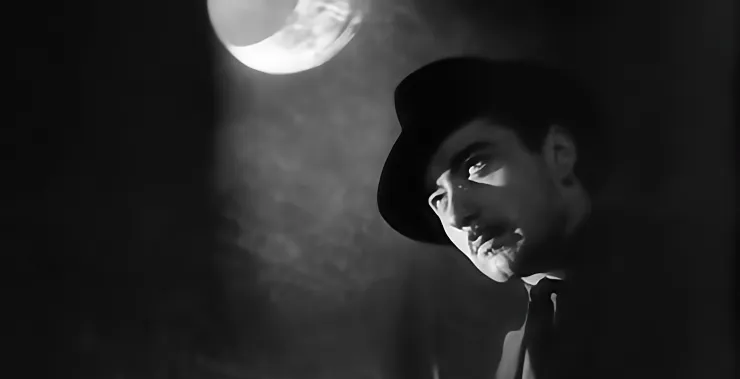
Unseen for nearly 50 years, a re-mastered version of The Green Cockatoo was screened at the 2005 New York City Film Festival.
The first thing one notices about The Green Cockatoo is the efficiency of its prologue, deftly imparting both cultural and socio-economic subtext via convincing, natural dialogue. Already, we see Graham Greene’s talent shining through.
Despite the train’s sterile atmosphere, the scene marks the first instance of an Early Noir sensibility, as many of the Film Noir stories of the 1940’s and 50’s involved trains in one way or another.
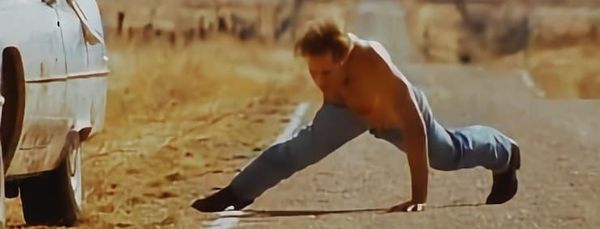
When we reach the city, however, these Early Noir components become distinctly more overt. Night clubs, gangsters, lounge singers. Darkness, shadow and silhouette. No one here is innocent. No one here is pure. Even mild-mannered Eileen starts lying as soon as she arrives.
But nothing screams ‘Noir’ louder than the predicament of the film’s protagonists. Through no fault of their own, they are drawn into a seedy underworld. To escape that world, they must cross moral lines, commit transgressions, and even become criminals themselves.

Beyond its value as a cultural artifact, The Green Cockatoo is best described as a missed opportunity. The film is set up as a cautionary tale, but lacks a decisive lesson to anchor its allegorical intent.
Eileen is basically a Little Red Riding Hood character: alone, naive, vulnerable, away from home for the very first time. London represents a forbidden place, a jungle or a forest or a wasteland. The gangsters are the big bad wolves, swallowing up any prey foolish enough to wander through their woods.
Despite this initial structure, the story concludes quite quickly, with a convenient resolution that teaches us nothing. Eileen and Jim’s legal peril is remedied through dialogue. Their swift exodus to the country represents an implied marriage better suited to a comedy or musical.
Curiously, The Green Cockatoo also lacks the characteristics of the American gangster films it often seems to imitate. There is no charismatic villain, no rags to riches story, no iconoclastic crime lord who becomes a victim of his own success. The bad guys are simply low-end crooks, wielding only knives and their own gloved fists, making money but never grabbing wealth or power.
Thus, the question must be asked, what exactly are we watching?

Similar in length to Pre-Code larks like Blood Money (1933), The Green Cockatoo is more akin to a present-day television episode than a full length feature film. With just one additional character, a compelling ‘B’ story, or perhaps an augmented set of stakes, the film could have been a thrilling ninety minutes.
But Greene was never one to employ filler. The Third Man (1949) is barely long enough to qualify as a novel. Even his masterpiece, The Quiet American (1955) is under three hundred pages long.
Featuring tragic, comic and musical components, The Green Cockatoo could easily be considered a melodrama. But this characterization is thrown into question by the aforementioned Film Noir tropes. And yet, its status as an Early Noir is also complicated by the fact that it seems to subvert those very conventions.
Let’s use Night and The City (1950) as an example. Harry Fabian (Richard Widmark) is the hustler on the run. His doting girlfriend Mary (Gene Tierney), a lounge singer, tries in vain to keep him safe and out of trouble.
But in The Green Cockatoo, it’s Eileen who’s being chased, while the singer with a heart of gold is, in fact, a man.
So perhaps “inside-out-proto-noir” is the best way to think of it? Jokes aside, ultimately I think of The Green Cockatoo as both a chase movie and a mistaken identity film.

In the opening scene, one cannot help but notice the similarities between the ‘philosopher’ character and the Cobbler/ amateur Nietzche scholar from Baby Face (1933).
Like Baby Face’s Lily Powers, young Eileen is also given unsolicited philosophical advice from a near stranger. At least in The Green Cockatoo, the man is actually a real philosopher, not just an extremely wise shoemaker. Having said that, I feel compelled to call bullshit on this trope. Was this ever really a thing?
Perhaps the trope was meant to incorporate Freudian psychology into these respective screenplays, amateurish attempts to illustrate the female protagonists come from broken homes and are thus at risk of falling prey to a “certain kind of man.”
The most interesting character in The Green Cockatoo is clearly Dave Connor (Robert Newton), the foolish swindler whose death becomes the locus of the film’s dramatic tension. We wonder about Dave’s backstory, how he came to think he could out-smart the mob, why he did it in the first place. In fact, The Green Cockatoo would have been a better movie if Dave had lived and his singing brother’s death had instead provided the conflict.
There’s even a sense in which this film is a spiritual cousin of Night and The City (1950). What would have happened if Harry Fabian hadn’t been killed? Maybe he’d be acting like Dave.
At times, the “gentleman” gangsters remind me of characters from a Guy Ritchie film.
Several night scenes in London’s grim alleyways are reminiscent of Fritz Lang’s M (1931).
The eponymous tavern is an early example of naming a film after the bar where the plot unfolds (think The Blue Iguana, Cocktail, Coyote Ugly, St. Elmo’s Fire, Trees Lounge, etc..).
Bringing things back to Noir, The Green Cockatoo also shares story elements with films like Alfred Hitchcock’s The 39 Steps (1935) and North By Northwest (1959) as well as Joseph L. Mankiewicz’s criminally underappreciated Somewhere In The Night (1946).

Despite numerous shortcomings, The Green Cockatoo provides an interesting preview of cinematic things to come. We also get a glimpse of Greene’s trajectory as a writer.
Who doesn’t see an inkling of Anna Schmidt in Eileen? Or the roots of Harry Lime in Dave Connor? Or the ruined streets of Post-War Vienna in the grimy corners of depression-era London?
A forerunner to contemporary films like Frantic (1988), Red Rock West (1993) and Run Lola Run (1998), The Green Cockatoo is suitable for curious British Film Noir aficionados, or very dedicated Graham Greene completists.
If you don’t fall into these categories, The Green Cockatoo might be better off in its cage.
Copyright © Debtford Press 2026.