Night and the City (1950): Get Rich or Die Running
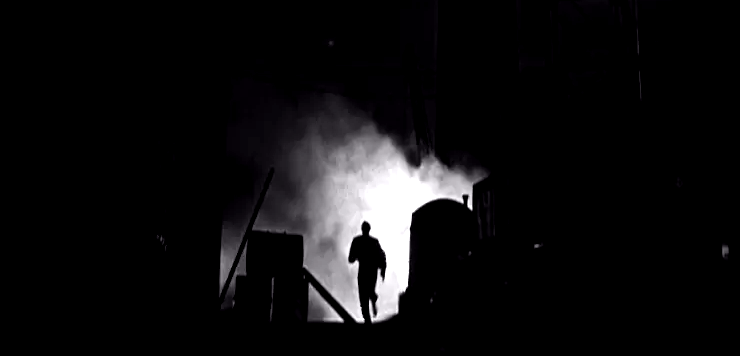
Scored by the echoing footsteps of its desperate protagonist, 'Night and the City' is a Film Noir masterpiece.

Scored by the echoing footsteps of its desperate protagonist, Jules Dassin’s Night and the City is a Film Noir masterpiece.
The film accelerates from a running start, offering few breathers as it moves toward its inevitable climax. We catch up with Fabian as he embarks upon another get rich quick scheme, a series of con jobs he believes will lead to a career in London’s entertainment industry.
But Fabian gets in too deep, and his only choice is to hatch an even bolder scheme—one that carries deadly consequences.
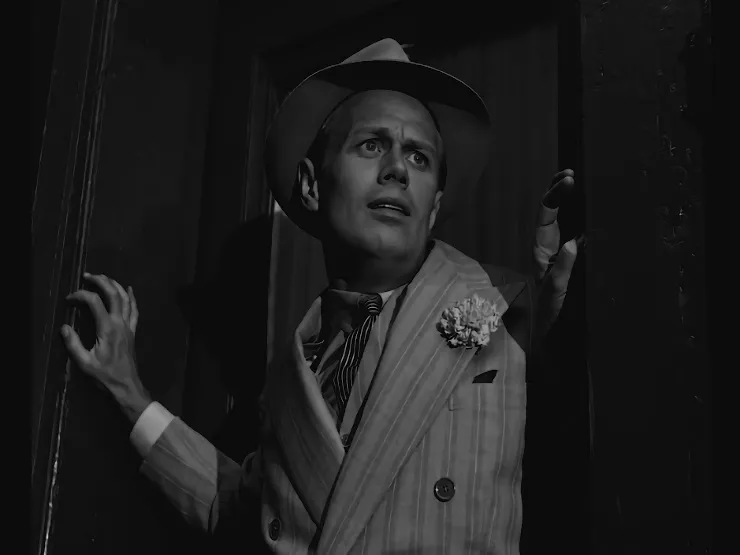
Night and the City can be watched on different levels. When we set aside the historical, political and autobiographical readings and examine the movie itself, what remains is a perfectly rendered Noir.
Plotting is tight and simple, a logical chain of events in which the stakes are gradually raised. Nothing gets lost. No cheap devices are employed. No scenes are wasted.
Characterization is as efficient as the plot. Motivations are clear. Decisions make sense. Dialogue seems natural to the environment, with minimal exposition. Everyone is conning everyone. Everybody’s chasing the American dream in a cynical post-war London where the rules haven’t yet caught up with the game. Like all good genre fiction, these characters embody their actions.
Visually, the Film Noir aesthetic is on full display. Silhouettes in doorways. Long black shadows on dark empty streets. The London city skyline set against an ominous evening sky. Its brilliant conclusion is reminiscent of the classic sewer scene in Carol Reed’s The Third Man (1949), except longer and more exhausting and mostly outdoors.
Although the narrative point of view is from the third person, crucially, we are in Harry Fabian’s shoes as his world unravels.
While he’s on the run, we sense the conspiracy, we glimpse the gangsters lurking in the shadows.
When his seedy pals sell him out one by one, we feel the noose tightening around his neck.
And as dawn finally breaks and Harry must accept his fate, we mourn his ruin with the same bleak sense of relief.

Night and the City lends itself to an autobiographical reading given Jules Dassin’s contentious relationship with the US government.
A victim of McCarthy-era communist witch hunts, Dassin was forced to continue his career in Europe after he was added to the Hollywood blacklist.
In the film, Harry Fabian’s demise seems to mirror that of Dassin’s. Both worked in fields controlled by rackets, both were banished from their respective industries because they challenged the existing order.

A Marxist/Feminist reading interprets both Fabian and Helen Nosseross as oppressed workers trapped in an exploitative economic system. Their actions are therefore justified, regardless of the moral implications of their choices. They are ultimately punished for those efforts and brutally prevented from ascending to the ruling class. In death (a literal death for Harry and a figurative death for Helen), they become symbolic scapegoats, sacrificed by their bourgeois masters to preserve the status quo.

To me, Night and the City is a film that explores not only Fabian’s quest to succeed in business, but also his need to actualize a certain idea of himself. Nothing in the movie signifies this better than the classic “wrestling scene.”
This epic match personifies Harry’s struggle for success, a lose/lose scenario that also foreshadows his ultimate demise. Just like Gregorius the Great, even when Harry wins—he loses.
In this regard, the film expresses a contemporary ethos: Get rich, or die trying. Except Harry doesn’t get rich. For him there’s only death. This execution is not delivered by the police, the state, or even nature itself, but by the very people who should understand his plight the most—his friends.

I also find it curious that despite a bevy of antagonists, Night and The City lacks an overt femme fatale.
Yes, she’s a lounge singer, but Mary Bristol bears little resemblance to other Film Noir anti-heroines. Her character has nothing in common with Barbara Stanwyck’s Phyliss Dietrichson (Double Indemnity, 1944), or Rita Hayworth’s roles in films like Gilda (1946) or The Lady From Shanghai (1947). Simply put: she’s far too pure. Her relationship with Harry is barely explored. She’s given little time on screen and when she’s present at all, she’s more like his mother than a harlot, more like a Madonna than a whore.
While Helen Nosseross possesses the right characteristics, she’s already the femme fatale in someone else’s tale—namely in the story of her shady husband Phil.
My suggestion is to analyze the title.
“The City” is the real Femme Fatale, the source of Harry’s deluded dreams and motivations, the fix that keeps him coming back for more.
“Night” is the true antagonist, thwarting Harry’s rise at every turn, relenting only when he dies.

Beyond everything discussed thus far, what I like most about Night and the City is the way it plays with time.
Harry’s story begins in the middle. We know very little about his past, his family or his girl. We learn about him through his actions. We see him hustle drunken tourists. We watch his glib interactions with the shady people in his orbit. There are no flashbacks. We infer what we can from our observations.
This is a deliberate choice by the filmmaker. There’s no point in telling the audience where he came from. Harry Fabian has always been a hustler. Period.
Beyond Harry’s personal chronology, the film also plays with our temporal perceptions.
Logic tells us the film takes place over many weeks or months, as Harry’s activities are far too numerous to happen in a condensed period of time. And yet, despite that, the film is structured to resemble one very long night.
Only a few scenes occur in the daytime, and the film lacks temporal signifiers like calendars, seasons or well known historical events. Viewers can interpret this in different ways.
Once again, my suggestion is to pay close attention to the title.
The movie seems to tell us that in “The City” of the film, morning only comes for those who make it. Those who can’t climb up and join the bourgeoisie are doomed to toil away in the endless night of the working-class.
© 2026 Debtford Press