The Hot Spot (1990): No Fury Like a Woman’s Scorn
The Hot Spot’s mixed temporal landmarks create an anachronistic soup, allowing us to inhabit both 1953 and 1990 at the same time.
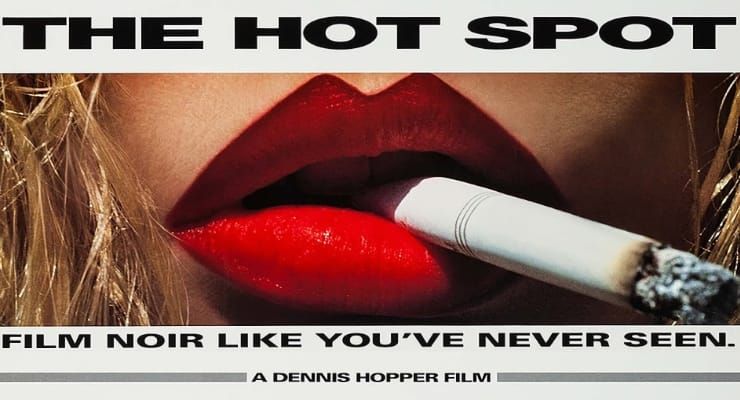
Perhaps unsurprisingly for fans of Charles Williams’s gonzo brand of Rural Noir, The Hot Spot has it all: sex, violence, murder, full frontal nudity, extortion, fraud, arson, adultery, a bank heist, death by sexual misadventure, incest, a double love triangle, a naked sawdust sex scene, and that weird old guy with the moustache from Twin Peaks.
At times this maximalist, schizophrenic style reminds me of Backtrack, a forgotten Dennis Hopper film released in 1990. Originally titled “Catchfire,” Backtrack starred Jodie Foster, with Hopper appearing as the film’s eccentric yet sinister antagonist. Hopper initially disowned the film, opting for an “Alan Smithee” directorial credit. Eventually, when his director’s cut was granted by the studio, the film was re-released as Backtrack. Although their plots are completely different, the sheer number of tropes that Hopper manages to stuff into Backtrack is similar to his work on The Hot Spot.
Despite their similarities, The Hot Spot is a vastly superior film. It takes its time establishing the stakes. Multiple open loops result in a wide range of outcomes and consequences. Theft, sex, and murder become interchangeable: they’re all part of the same perverse thrill. This is what makes movies fun to watch.
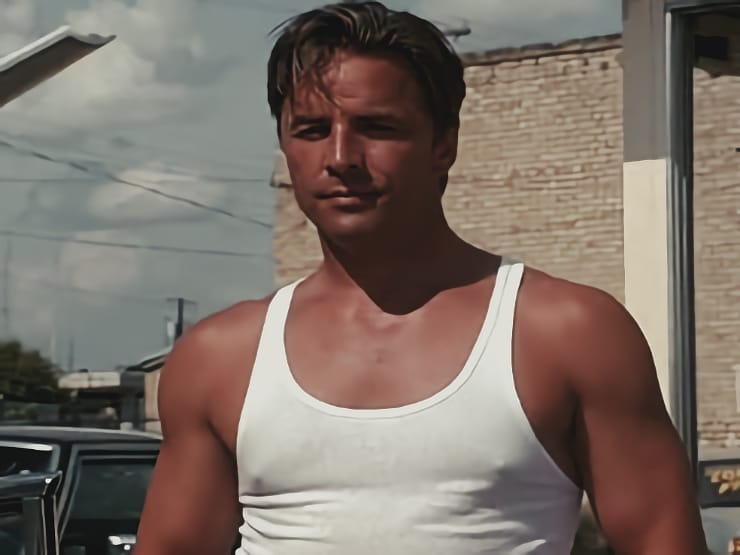
The Hot Spot’s narrative point of view is executed perfectly, told entirely from Harry’s perspective. He appears in almost every scene. Aside from a couple fleeting instances, we never see things happen that Maddox doesn’t. Although this might seem like a low bar, sadly, the number of films that lack a functioning interior logic is only increasing. Have you suffered through another awful Marvel movie lately?
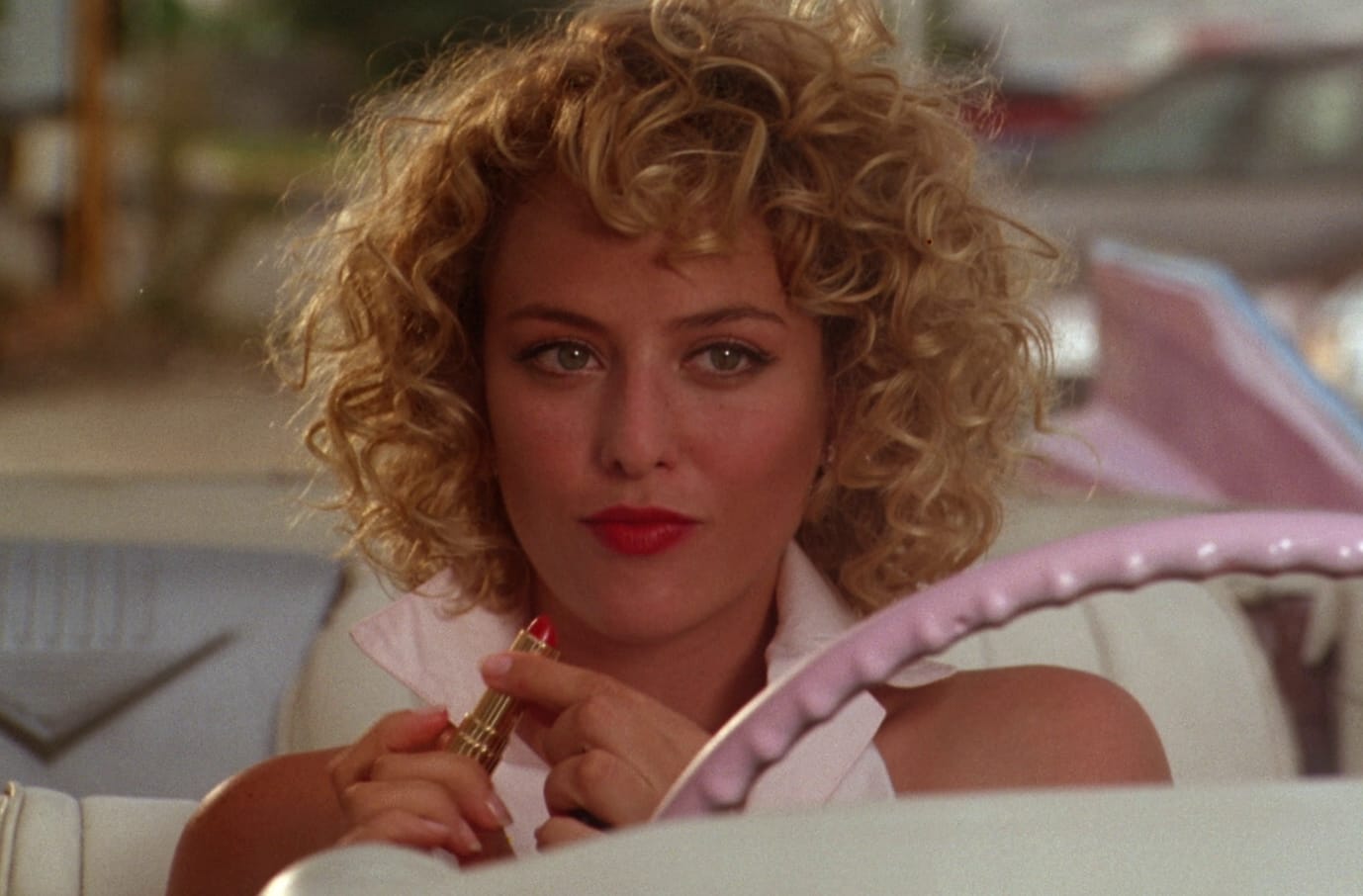
The flirtatious innuendo between Maddox (Johnson) and Dolly (Virginia Madsen) creates an evocative dramatic tension, echoing the lust charged patter of a pulpy dimestore paperback. Madsen nails the unhinged southern Femme Fatale without crossing over into satire or relying on cliché.
The Hot Spot is also perhaps the only movie in the Film Noir canon with a Femme Fatale who hatches a scheme to kill her husband, seduces a man to help her do it, then gets bored and ends up doing it herself—in the middle of the movie. Imagine if in Double Indemnity (1944), Phyllis (Barbara Stanwyck) got fed up and just pushed her husband off the train while Walter Neff was in the bathroom!
The Hot Spot’s third act contains a compelling double twist connected to the love triangle between Maddox, Dolly and Gloria. Just before Maddox murders Frank Sutton (William Sadler), we are led to believe that Gloria (Jennifer Connelly) is the woman Frank is having sex with. But Harry’s love triangle turns out to be a square, when by advent of the cut on her face and her identical shoes, we discover the woman who was having sex with Sutton that night was actually Dolly (Virginia Madsen).
Sadly, the impact of this clever plotting is somewhat dulled by a clumsy reveal in the movie’s final moments. Anchored by the shoes, the double twist should have helped the film maintain its momentum right through until the end. But the manner by which Gloria exits Harry’s life doesn’t quite work. She goes gracefully and quietly, and Maddox just stands there and lets her walk away. In terms of narrative drive, I feel this is a missed opportunity.
When Maddox suspected Gloria of having sex with Frank Sutton, he should have broken up with her immediately. Then, upon discovering his mistake, the shoe reveal would have made twice the impact. With Harry completely broken, Dolly’s trap would have seemed so much more evil and manipulative—a true deal with the devil. This slight change would have elevated the lose/lose ending without sacrificing the genius of the twist. Most importantly, it would have added to the sense of inevitability and existential dread that is so synonymous with Noir.

In a subtle yet brilliant directorial decision, the year the film takes place is left mostly ambiguous. While we see vehicles, radios and telephones, we don’t see objects that overtly scream “1990.” In fact, computers, fax machines, mobile phones, digital watches and compact discs are entirely absent from the film.
The same is true with regards to set design and costumes. While the clothing would not have been considered trendy in a 1990’s context, it also doesn’t convey a specifically 1950’s aesthetic.
The police investigate Harry Maddox’s crimes using old-fashioned, analog methods of detection. And Harry seems brazenly unconcerned with leaving behind forensic evidence when he stages Frank Sutton’s suicide.
While most of the vehicles are from the 1970’s and 80’s, these models don’t look exactly new. And Jennifer Connelly’s low cut black bikini would have been considered truly scandalous in 1953.
In other words, The Hot Spot’s mixed temporal landmarks create an anachronistic soup, allowing us to inhabit both 1953 and 1990 at the same time. The film is evergreen: its story could play out in any rural town, at any time of year, in any post-war decade. This ambiguity allows Hopper to stay faithful to the source material without alienating mainstream audiences. In this respect, The Hot Spot bears some resemblance to the films of Wes Anderson, Charlie Kaufman and Jim Jarmusch.
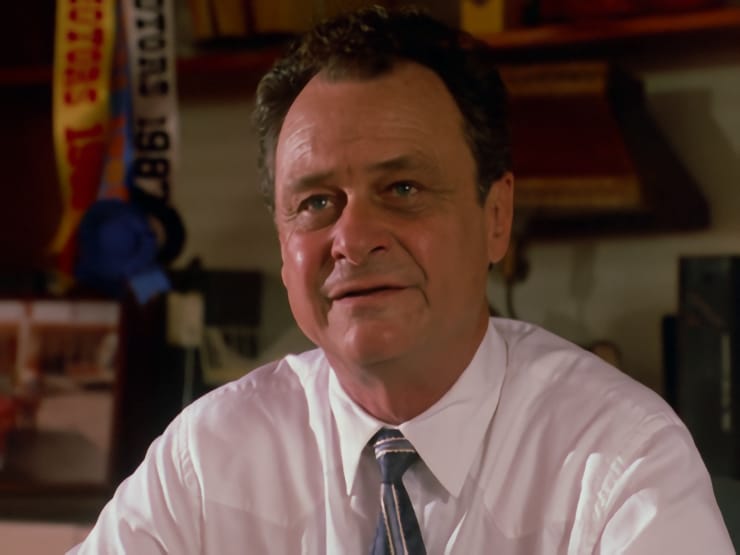
The Hot Spot is pure unvarnished pulp, the kind of book you bought for 50 cents at a 1980’s general store, or found amongst a box of junk inside your grandpa’s attic. It’s among the truest representations of a pulp novel that I’ve ever watched, without the irony and pastiche leveraged by directors like Quentin Tarantino. Hopper understood a crucial thing that most directors don’t: a pulpy story has to happen in a pulpy world. If the world of the story is properly constructed, the audience doesn’t question the actions or the authenticity of the characters—and irony is therefore not required. So while The Hot Spot’s reality may resemble our own in many ways, the goal is not verisimilitude. This isn’t social realism. This is Noir. Suspension of disbelief is an essential prerequisite.
The Hot Spot draws you in, gradually compelling you to acquiesce. Once you’re invested, Hopper slowly turns the dial, cranking up the pulpy madness until you’re living somewhere dark and strange and horny.
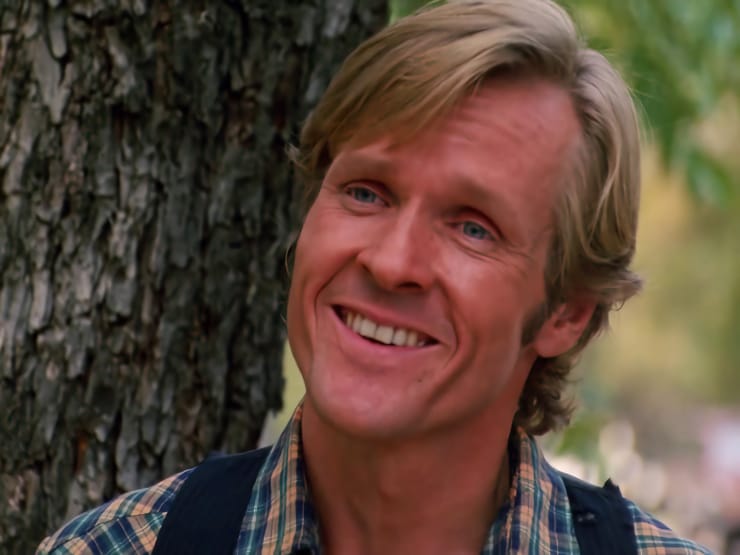
Broadly speaking, The Hot Spot bears resemblance to a number of movies from the classic Film Noir era. Harry Maddox (Don Johnson) represents the “other” kind of Film Noir stranger. Not the violent man of rules and principles played by Brad Pitt in Killing Them Softly (2010). Not the sinister imposter portrayed by Edward G. Robinson in Orson Welles’ The Stranger (1946). Not even the naive ambitious fool of Jules Dassin’s Night and The City (1950).
Harry Maddox is a straight up grifter: handsome, devious, clever—and fully committed. He doesn’t leave town. He doesn’t get caught. He doesn’t die. In this respect, The Hot Spot’s ending reminds me of Jacques Tourneur’s brilliant Out of The Past (1945).
In Out of The Past, Jeff Bailey (Robert Mitchum) never returns to wholesome California. He knows his fate lies with Kathie Moffat (Jane Greer), consequences be damned. She might not own his heart like Ann (Virginia Huston) does, but she owns his imagination, his libido, and his destiny. Most importantly, Kathie owns Jeff’s past. No matter how badly things might turn out, the two of them are bound by history.
Like Out Of The Past, The Hot Spot ends with Harry Maddox reluctantly accepting his fate. No matter how much he may want to be with someone good, in the end, Harry knows that he would only break Gloria’s heart. He’s better off with someone just as devious as he is. He likes the chase. He’s into money, violence, kinky sex, and playing games. Dolly Harshaw delivers these qualities in spades. She’s a bad, bad girl. She’s just like him.
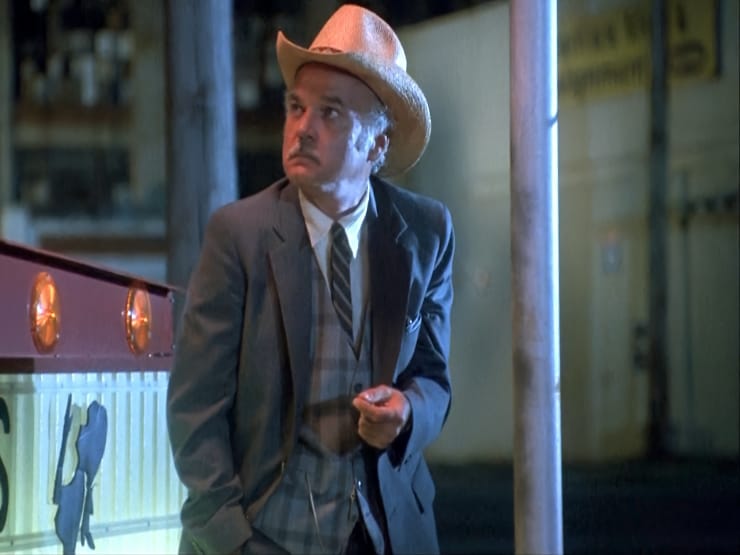
My favourite thing about The Hot Spot is its metaphorical neutrality. Like many of its Film Noir predecessors, it conveys no distinct political or ideological subtext. Although it’s set in Texas, it does not explore the true nature of Texas or America more broadly. Beyond the Film Noir tropes discussed above, the film does not allude to other works of art, cinema or literature. If The Hot Spot does possess a deeper meaning, my suspicion is the author intended it to hint at something psychological: the often insidious underbelly of small town USA; the irresistible inertia of lust, greed, boredom and fate.
But these are broad strokes. The Hot Spot is a genre film. Period. Sit back and enjoy the ride.
That’s all for now.
See you in the movies,
Tod.
© Copyright 2026 by Debtford Press. All Rights Reserved.