
Baby Face (1933): Baby Puts The Censors In A Corner
A decade before Double Indemnity, Barbara Stanwyck brought the Pre-Code era to a controversial close with her sultry turn in Baby Face.


A decade before Double Indemnity, Barbara Stanwyck brought the Pre-Code era to a controversial close with her sultry turn in Alfred E. Green’s Baby Face. It’s thus a fitting choice for the final instalment of our Pre-Code gangster series.
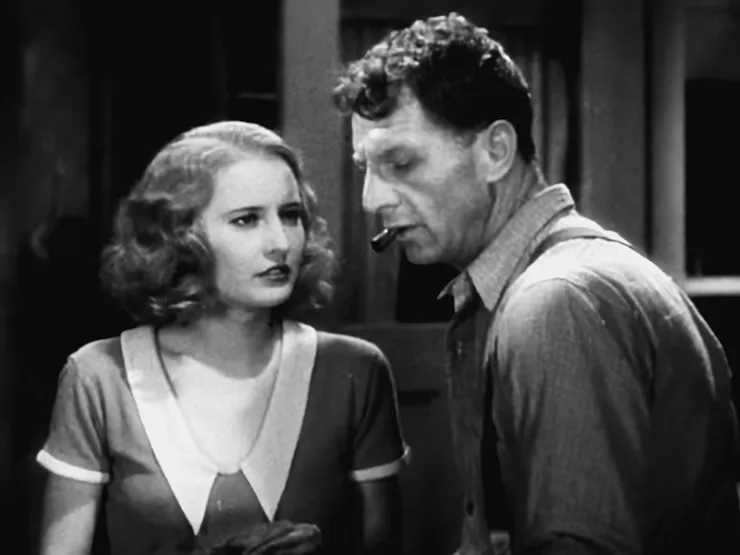
Lily’s assertive, sexually liberated persona was absolutely an archetype for the hard-boiled femme fatales of the 1940’s and 50’s. But beyond these characteristics, few aspects of Baby Face foretell the conventions or aesthetics of the Film Noir period.
While not a full-fledged Early Noir, it’s difficult to interpret Baby Face purely as a drama either. Comic elements are sprinkled throughout. Music is often light and airy. Beyond the prologue, the tone is never dark or ominous, even when it seems like Lily has over-played her hand. The only true dramatic moment occurs with moments left, when Lily drops her guard and chooses love over money.
Lily escapes a life of prostitution by sheer coincidence. She never has to fight for her emancipation. We only briefly catch a glimpse of her in pain. It’s not a heroic act or even her own free will that leads to her escape—it’s the fire that truly sets her free.
Upon arriving in New York, Lily never seems to be in any danger. Even when she loses, she somehow manages to win. Her victims are always men who always deserve it. We never see them beyond the confines of the bank. We never view them in a sympathetic light.
Characters who die do so-off screen, without tragedy or pathos. Even her abusive father, the film’s only obvious villain, dies beyond our point of view, robbing the audience of the chance to watch him burn and think “good riddance.”
Neither Early Noir, nor Comedy or Drama, the question therefore must be asked: What exactly is Baby Face?
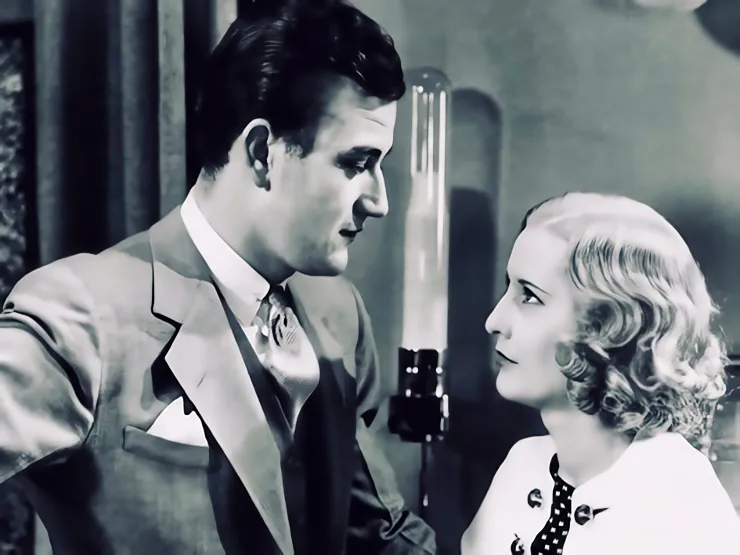
Lily’s character arc is comparable to that of Tommy Powers (James Cagney) in The Public Enemy (1931), or Nan Cooley (Sylvia Sweeney) in City Streets (1931), characters who repent for their sins just before it’s too late to be forgiven.
Though achieved through different methods, her ascension to the top of the banking world is also not that different from that of Rico Bandello (Edward G. Robinson) in Little Caesar (1931). She arrives in a the big city, decides who she wants to be, and then sets out to become that person—by any means necessary.
Unlike Powers and Bandello, Lily doesn’t die at the end of the film, but she does die a figurative death when she allows herself to fall in love, shedding her former self by relinquishing her pilfered loot in order to preserve her husband’s life and reputation. In this respect, Lily’s choice echoes the anti-wealth sentiment expressed by many depression-era films.
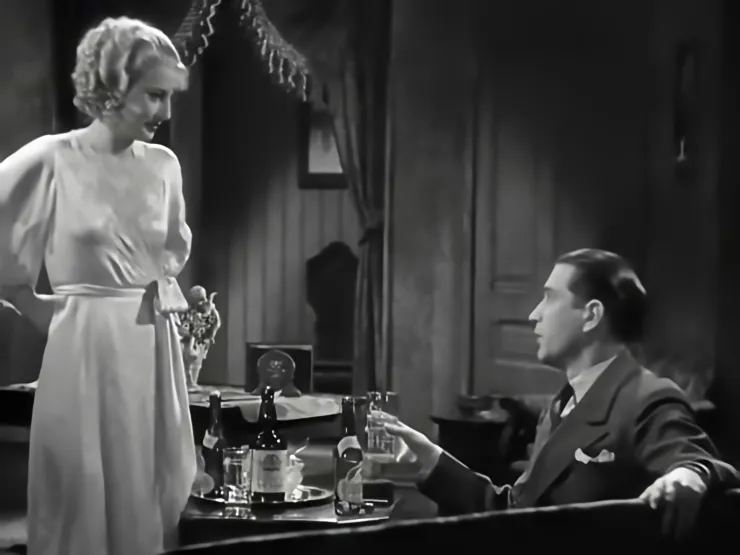
The Nietzchean philosophy espoused throughout the film is crucial to our understanding of its true intention as a feminist take on the pre-code gangster movie. Consider this passage:
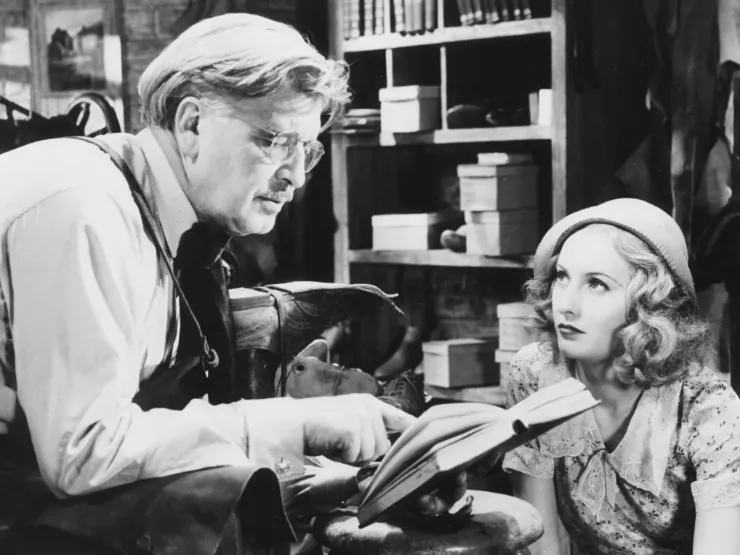
“A woman, young, beautiful like you, can get anything she wants in the world. Because you have power over men. But you must use men, not let them use you. You must be a master, not a slave. Look here – Nietzsche says, ‘All life, no matter how we idealize it, is nothing more nor less than exploitation.’ That’s what I’m telling you. Exploit yourself. Go to some big city where you will find opportunities! Use men! Be strong! Defiant! Use men to get the things you want!”
Met with both derision and devotion since its 1910 publication, Friedrich Nietzche’s Will To Power is almost perfectly compatible with the ethos of the American gangster movie. One can almost imagine fictional gangsters like Tony Camonte or Enrico Bandello carrying a paperback copy in their coat pockets.
Lastly, given the year of its release, the title is an obvious reference to George “Baby Face” Nelson, the notorious bank robber who achieved international notoriety when he helped John Dillinger escape from prison in 1934.
Although she never physically robs the bank, Lily reaches the very top of its financial structure, married to a member of its founding family—and she doesn’t have to die or go to jail to do it.
Don’t kid yourself. Despite generic notions to the contrary, Baby Face is absolutely a gangster movie, it's just packaged up a little differently.
Ninety years after its release, Baby Face continues to resonate with viewers for a simple but important reason: if the protagonist had been a man, the film would never have been censored in the first place.
The Hays Office pulled the film’s original version for flouting the conventions of the Production Code. After extensive negotiations, Baby Face was edited and re-released with the following changes:
- Lily’s seduction of the railroad worker was completely cut from the film.
- The comfort and luxury she experiences living as a “kept woman” was de-emphasized.
- The ending was altered to depict Lily’s gambit as a failure, returning to her hometown after losing everything in New York City.
- The Nietzchean Affirmations espoused by the cobbler were replaced by moralizing voice-overs.
While the film’s frank depiction of female sexuality was guaranteed to cause a stir, the censor board’s objection to Nietzche is more significant. Here, the board seems just as concerned about subversive philosophy as it is with obscenity.
This phenomenon provides us with a scary illustration of just how little censorship has changed since the early 1930’s. Like today, depression-era censors were far more worried about harmful ideas than they were about harmful content.
After the chaos of the Great War, the burgeoning Soviet threat and the upheaval of the Great Depression, the State was terrified of potentially destabilizing social movements. Under the auspices of preserving moral standards, governments stifled the promotion of progressive ideas in favor of the “propaganda of the status quo” enshrined in the Production Code.
Eliminating “dangerous ideas” in the guise of protecting citizens from “harmful content” has always been the true function of censorship. We saw this in the McCarthyism of the 1950’s; Nixon’s Law and Order agenda in the early 1970’s; the Satanic Panic of the 1980’s; the war on Gangster Rap in the early 1990’s; and the mainstream media’s Faustian embrace of politically correct language throughout the 2010’s. We see the same phenomenon playing out right now with the Neo-Fascist book bans imposed by the extreme political right, and in the illiberal left’s thought-police style rhetoric around gender neutral pronouns.
The historical difference is that while censors of the past were employed by State Governments and Institutions, modern day censors are the creators themselves, voluntarily cleansing their art of provocative ideas in order to protect the online reputations that have become essential to monetizing content in a world dominated by intellectually sterile big tech algorithms.
In 1933, just as in our present day, enforcing the Production Code was never about protecting citizens, it was about stifling ideas and promoting the prevailing orthodoxy preferred by the ruling class. “Harmful content” has always been a Trojan Horse. Baby Face gave censors an excuse to storm the city gates.
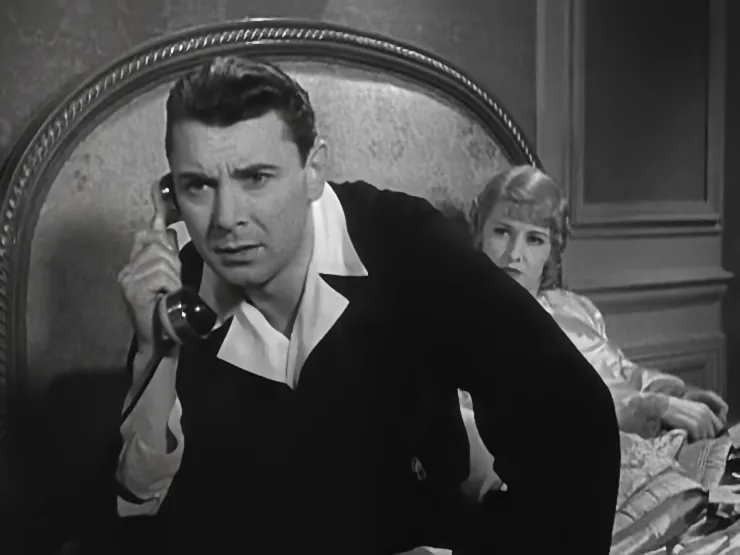
Daring in its time, Baby Face foreshadows the cunning female protagonists of films like Married To The Mob (1988), Basic Instinct (1992) and The Last Seduction (1994). More importantly, the film is an overlooked canonical text in both the gangster movie genre and the broader history of American Cinema.
Unlike many of its Pre-Code counterparts, Baby Face still feels watchable and fresh today. Supported by a stellar cast that featured George Brent, Donald Cook, and a young John Wayne, Barbara Stanwyck’s star power remains unquestionably bright.
That’s all for now.
See you in the movies,
Tod
© Copyright 2026 Debtford Press. All rights reserved.


